We Make Tax Filing A Breeze
Home » US Cross-Border Business Structuring: A Foreign Investor’s Guide

For international entrepreneurs, particularly those in regions like India, the United States represents an unparalleled opportunity for market expansion, investment, and strategic growth. However, this expansion requires careful cross-border business structuring the strategic organization of legal entities, assets, and operations across both your home country and the US to ensure tax efficiency and legal compliance.
A successful structure is more than just forming a company; it is the foundation upon which your global tax liability and operational success are built.
Cross-border business structuring is the comprehensive process of establishing a cohesive legal and financial framework that spans multiple countries.
The primary goals of effective structuring when expanding into the US are to:
Without a correct structure, foreign businesses expose themselves to severe IRS penalties, accidental tax residency, and double taxation outcomes that are easily avoided with expert planning.
The most crucial decision in US expansion is selecting the right legal entity. For foreign investors, the choice typically narrows down to two main options, each with vastly different tax implications: the Limited Liability Company (LLC) or the C-Corporation (C-Corp).
While the LLC is renowned for its operational flexibility, its tax treatment can create significant complexity for foreign owners who are non-residents of the US.
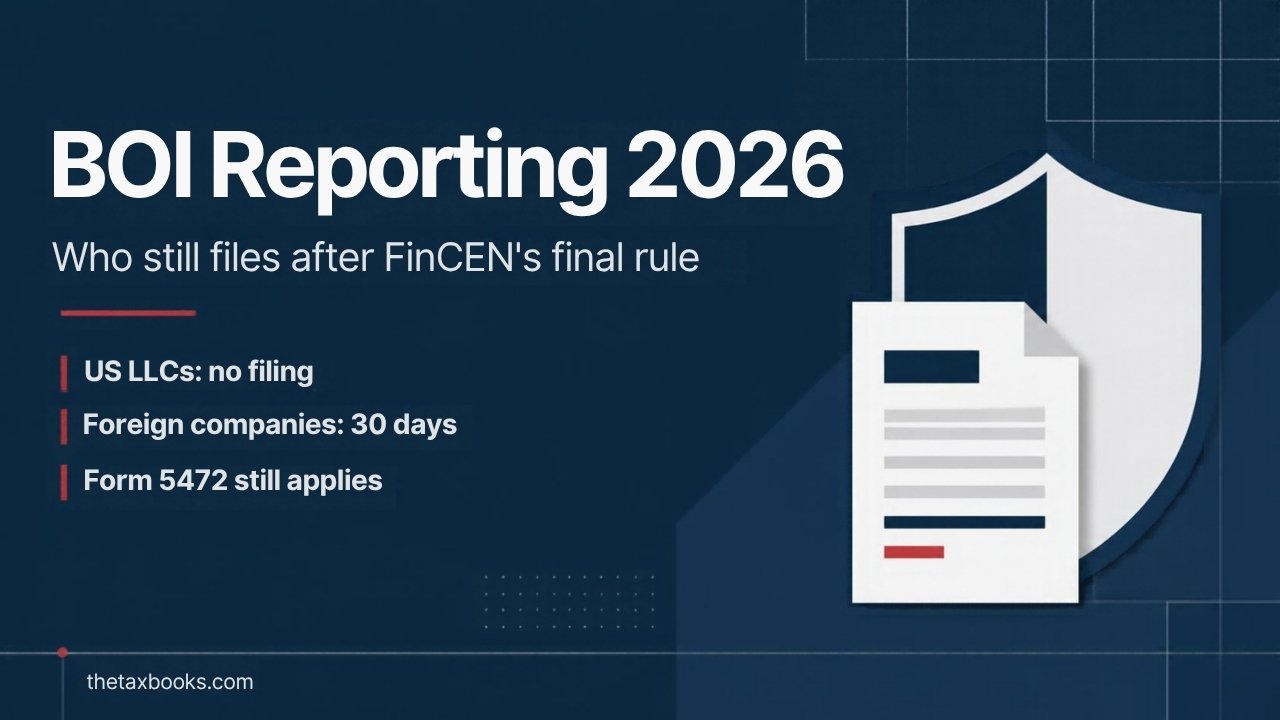
The Major Hurdle: Foreign-owned LLCs that are disregarded must still file Form 5472 along with a pro-forma Form 1120 if they have reportable transactions with related foreign parties, incurring a minimum penalty of $25,000 for non-compliance. This often catches international business owners off guard.
The C-Corporation is often the cleaner and more globally accepted structure for foreign investment in the US.
Feature | Foreign-Owned Disregarded LLC | US C-Corporation (C-Corp) |
US Tax Filing | Owner files personal Form 1040-NR. | Entity files Form 1120. |
Ownership Tax | Owner taxed on all profits instantly (pass-through). | Owner taxed only upon dividend distribution. |
Complexity Risk | High risk of unintended tax liability and severe Form 5472 non-compliance penalties. | Generally clearer separation between corporation and owner. |
Once your entity is established, compliance becomes the daily reality. US tax law imposes specific reporting requirements on foreign-owned domestic entities that are non-existent for purely US-owned businesses.
The IRS uses specific informational returns to track transactions involving foreign-related parties:
Filing these forms accurately is a hallmark of expert tax compliance. TheTaxBooks specializes in ensuring timely and accurate preparation of these critical informational returns.
When structuring cross-border operations, foreign businesses must carefully manage the concept of Permanent Establishment (PE) to avoid unexpected US tax liability.
According to US tax treaties, a foreign entity is only subject to US income tax on its business profits if it maintains a Permanent Establishment in the US. PE generally means having a fixed place of business (an office, a factory, a branch) or a dependent agent who habitually concludes contracts in the US.
Income deemed to arise from a US trade or business is classified as Effectively Connected Income (ECI). ECI is taxed at regular US federal and state income tax rates. Proper structuring ensures that only genuine ECI is taxed, while passive income (like interest or dividends) is treated differently, often benefiting from reduced treaty rates.
The US government requires comprehensive reporting of foreign financial assets and accounts:
Working with a specialist like TheTaxBooks, led by experienced Principal Consultant Kishore Chennu (MBA, CMA, EA-IRS), ensures that your cross-border structure provides strategic advantages:
The regulatory landscape for international businesses in the US is complex, layered, and unforgiving of mistakes. Incorrect entity classification or the failure to file critical informational returns like Form 5472 can destroy a business’s early profitability with non-compliance penalties.
At TheTaxBooks, we specialize in guiding international clients through every phase of US market entry:
We provide the authoritative, clear, and easy-to-understand expertise you need to build a compliant and tax-efficient presence in the United States, allowing you to focus on your global expansion.
To learn more about how you can reduce your taxes and save money, check out the helpful resources on our blog or contact us today to schedule a consultation.