We Make Tax Filing A Breeze
Home » IRS Tax Filing 2026: Key Changes & Preparation Guide

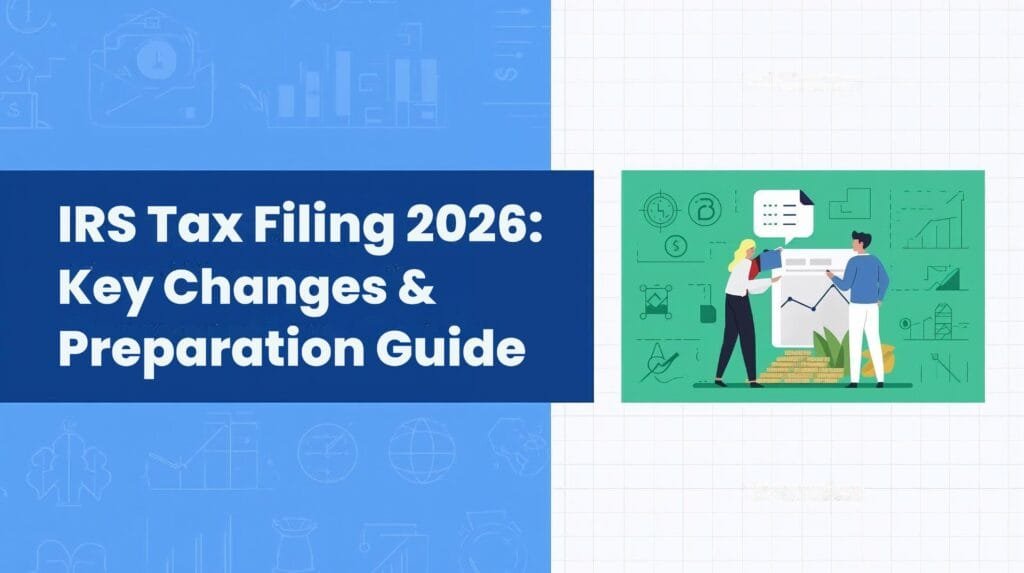
The 2026 US tax filing season is shaping up to be one of the most complex in recent history. With a combination of internal IRS restructuring, tightened digital reporting requirements, and the looming expiration of major tax provisions, taxpayers face a landscape that demands early action.
Whether you are a US-based employee, a freelancer in the gig economy, an expat living abroad, or an entrepreneur running a foreign-owned US LLC, understanding these shifts is essential to maintaining compliance and optimizing your tax position.
Tax year 2026 is widely regarded as a “transition year.” Many of the rules established under the Tax Cuts and Jobs Act (TCJA) are reaching their sunset clauses. Simultaneously, the IRS is leveraging increased funding to modernize its enforcement capabilities.
For taxpayers, this environment creates four primary challenges:
The IRS is currently undergoing a massive workforce adjustment and technological overhaul. While these “modernization” efforts are designed to streamline the taxpayer experience, the transition phase often results in temporary bottlenecks.
Current projections suggest that taxpayers involved in complex filings—such as amended returns, foreign asset disclosures (FBAR/FATCA), or large partnership audits—may experience longer-than-usual response times from IRS agents. To mitigate these delays, the IRS is leaning heavily into automated compliance checks. This means that even a small mathematical error or a missing form could trigger an automated notice, delaying your refund for months.
One of the most significant shifts for the 2026 filing season involves Form 1099-K. The IRS has been progressively lowering the threshold for third-party settlement organizations (TPSOs) to report payments.
If you receive payments via PayPal, Venmo, Stripe, Square, or online marketplaces like Amazon and Etsy, you are likely to receive a 1099-K.
Maintaining a strict separation between personal and business accounts is no longer just a “best practice” it is a necessity for 2026.
The Tax Cuts and Jobs Act (TCJA) brought significant changes in 2017, but many of its most favorable provisions are scheduled to expire after December 31, 2025. Unless Congress acts, the 2026 tax year may see a return to older, higher-tax frameworks.
Proactive planning in 2025 is the only way to lock in current benefits before they expire.
For international founders and Indian businesses with US subsidiaries, the IRS has ramped up enforcement on information returns. The days of “dormant” LLCs flying under the radar are over.
High-risk areas that will see increased enforcement in 2026 include:
US citizens living abroad and non-residents with US-sourced income face the most complex filing requirements. In 2026, the IRS is focusing heavily on Foreign Bank Account Reporting (FBAR) and FATCA compliance.
With global data-sharing agreements between international banks and the US Treasury, the IRS now has unprecedented visibility into foreign holdings. Errors in the Foreign Earned Income Exclusion (FEIE) or Foreign Tax Credits can lead to double taxation if not handled with professional precision.
To ensure a smooth filing season, we recommend the following steps:
To learn more about how you can reduce your taxes and save money, check out the helpful resources on our blog or contact us today to schedule a consultation.