We Make Tax Filing A Breeze
Home » Proposed Bill to End Dual Citizenship: US Tax & Expat Implications

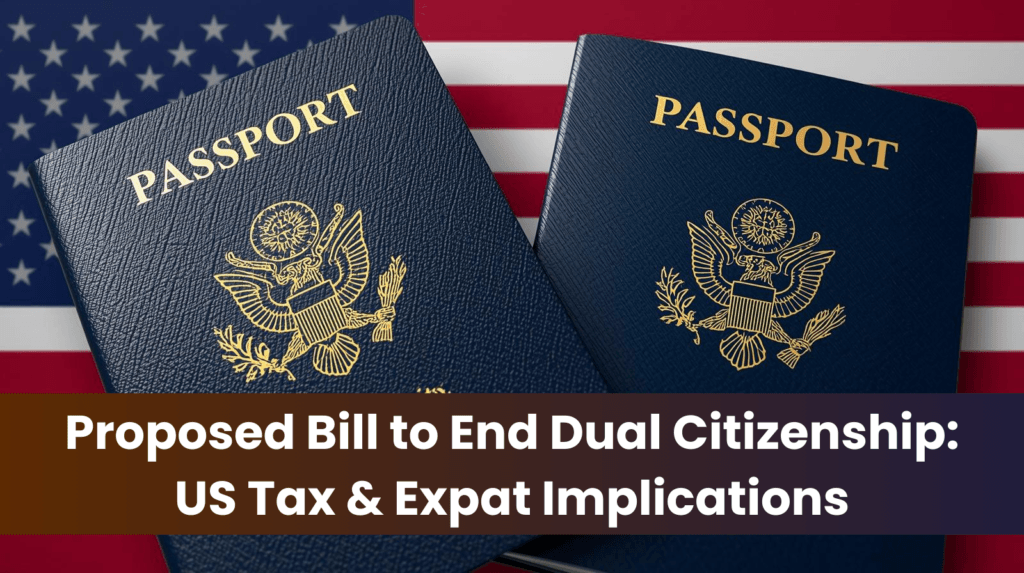
For Americans living abroad, those with deep ties to their country of heritage, and international entrepreneurs, the concept of dual citizenship is fundamental to managing their global lives and business ventures. Recently, a legislative proposal has drawn significant attention for its potential to reshape US citizenship law and with it, trigger profound, often unforeseen, US tax consequences.
TheTaxBooks, led by Principal Consultant Kishore Chennu (MBA, CMA, EA-IRS), specializes in navigating the complexities of US tax and compliance for this exact international audience. We are examining the proposed legislation and, crucially, explaining the severe financial risks it could introduce through the US expatriation tax regime.
On December 1, 2025, Senator Bernie Moreno (R-OH) introduced the Exclusive Citizenship Act of 2025. This bill aims to prohibit any person from simultaneously holding U.S. citizenship and the citizenship of another country, asserting that US citizenship should require “sole and exclusive allegiance.”
The most critical aspect of the bill lies in its proposed mechanism for implementation, which bypasses the current legal standard for losing citizenship:
It is this concept of “deemed voluntary relinquishment” through inaction that creates a potential fiscal catastrophe for many high-net-worth dual citizens.
Under current US tax law, the act of expatriation (voluntarily giving up U.S. citizenship or green card status) triggers an entirely separate tax regime governed by Internal Revenue Code Section 877A.
If the Exclusive Citizenship Act were to become law as written, the “deemed relinquishment” could subject thousands of Americans abroad and international business owners to the Expatriation Tax often referred to as the Exit Tax.
Anyone losing U.S. citizenship (including through a “deemed” relinquishment) is subject to a compliance test to determine if they are a “Covered Expatriate.” Meeting any one of the following thresholds results in this designation and triggers the Exit Tax:
For international business founders and US expats with substantial global assets (including real estate, investment accounts, and foreign business holdings), meeting the $2 million net worth threshold is common, making the risk of becoming a Covered Expatriate very high.
The Expatriation Tax is a mark-to-market tax. This means that a Covered Expatriate is treated as if they sold all of their worldwide assets including foreign real estate, business interests, and investment portfolios on the day before their loss of citizenship.
Many individuals who would be “deemed” to have relinquished their citizenship due to inaction would be blindsided by these life-altering tax consequences, without the opportunity to plan or restructure their assets in advance.
The TaxBooks regularly assists business owners, particularly from regions like India, with US Company Formation (LLC, S-Corp, C-Corp) and related compliance.
If a dual citizen who owns a US entity is forced into expatriation:
While the proposed bill highlights a serious potential tax issue, it is currently widely regarded by legal experts as likely unconstitutional.
The US Supreme Court has long established (notably in Afroyim v. Rusk and Vance v. Terrazas) that Congress cannot strip a citizen of nationality without the citizen’s voluntary and intentional renunciation. The government bears the burden of proving this affirmative intent.
By presuming that a dual citizen’s inaction equates to the voluntary and intentional surrender of citizenship, the Exclusive Citizenship Act appears to be in direct conflict with the Citizenship Clause of the Fourteenth Amendment. For this reason, many expect any enacted version of this legislation would be challenged and likely struck down in federal court.
While this bill is highly speculative and faces significant legal obstacles, it serves as a stark reminder of the complexities inherent in the US tax system for global citizens. The potential consequences of the Expatriation Tax are real for anyone considering changes to their US status.
At TheTaxBooks, we offer comprehensive services to help US expats and international business owners manage their compliance and structure their assets efficiently, including:
We focus on delivering authoritative, clear, and reliable solutions to minimize risk and ensure you meet every obligation.
To learn more about how you can reduce your taxes and save money, check out the helpful resources on our blog or contact us today to schedule a consultation.