We Make Tax Filing A Breeze
Home » US Expat Taxes 2026: The Ultimate Guide for Americans Abroad

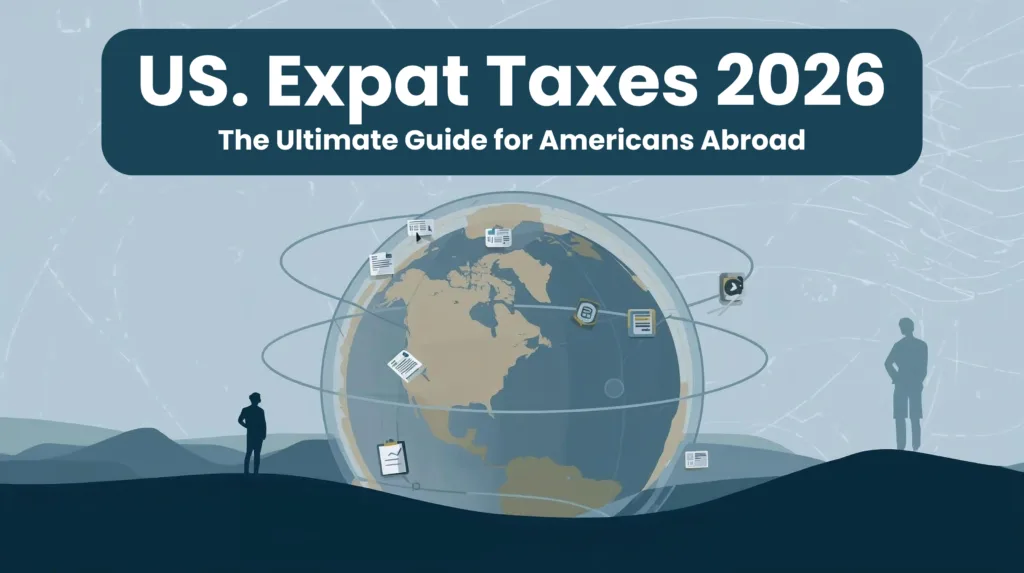
Living abroad as a US citizen is a rewarding experience, offering diverse cultures and new career horizons. However, the United States is unique in its “citizenship-based” taxation system. This means that if you hold a US passport or Green Card, your financial relationship with the IRS continues regardless of where you call home.
At TheTaxBooks, led by Principal Consultant Kishore Chennu (MBA, CMA, EA-IRS), we focus on helping the international community navigate these complex waters with clarity and confidence.
The most common question expats ask is: “Do I really have to file if I don’t live in the US?” The answer is almost always yes. The US taxes its citizens on their worldwide income. Whether you are earning a salary in London, renting out a villa in Spain, or receiving dividends in Mumbai, the IRS requires a full report of these earnings.
A tax return is required if your total gross income exceeds specific thresholds. For the 2025 tax year (the taxes you file in 2026), these limits have been adjusted for inflation:
Filing Status | 2025 Filing Threshold (Gross Income) |
Single | $15,750 |
Head of Household | $23,625 |
Married Filing Jointly | $31,500 |
Qualifying Surviving Spouse | $31,500 |
Married Filing Separately | $5 |
The US uses a progressive tax system, meaning your income is divided into “buckets” taxed at different rates. You only pay the higher rate on the portion of income that falls within that specific bracket.
Tax Rate | Single Filers | Married Filing Jointly |
10% | Up to $11,925 | Up to $23,850 |
12% | $11,926 – $48,475 | $23,851 – $96,950 |
22% | $48,476 – $103,350 | $96,951 – $206,700 |
24% | $103,351 – $197,300 | $206,701 – $394,600 |
32% | $197,301 – $250,525 | $394,601 – $501,050 |
35% | $250,526 – $626,350 | $501,051 – $751,600 |
37% | Over $626,350 | Over $751,600 |
For 2025, the standard deduction has increased to $15,000 for single filers and $30,000 for married couples filing jointly. While most expats use the standard deduction, you may itemize if you have significant mortgage interest, medical expenses, State & Local taxes paid (subject to the SALT cap) or charitable contributions.
The Child Tax Credit remains a vital tool for expat families. In 2025, the credit is worth up to $2,000 per qualifying child. However, if you use the Foreign Earned Income Exclusion (FEIE) to wipe out your entire US tax liability, you generally cannot claim the refundable portion of this credit.
The IRS provides three primary mechanisms to ensure you aren’t taxed twice on the same income.
For the 2025 tax year, the maximum exclusion is $130,000 per person. If both you and your spouse qualify, you can exclude up to $260,000 of combined earned income. To qualify, you must pass either the Physical Presence Test (330 days abroad) or the Bona Fide Residence Test.
If you live in a high-cost city abroad, you can exclude or deduct certain housing expenses (rent, utilities, insurance) that exceed a base amount. For 2025, the standard maximum housing exclusion is $18,200, though the IRS allows higher limits for specifically designated high-cost locations.
The FTC offers a dollar-for-dollar credit for taxes paid to a foreign government. This is often the superior choice for Americans living in high-tax countries like India, the UK, or Germany, as it allows you to carry forward unused credits for up to 10 years.
Beyond the standard 1040, expats must disclose foreign financial assets to prevent tax evasion:
Failing to file these forms can lead to severe penalties, often starting at $10,000. Managing these disclosures is a core part of the FBAR and FATCA reporting services we provide at TheTaxBooks.
Mark your calendars for these critical dates in 2026:
If you’ve just realized you are several years behind, the IRS offers a “get out of jail free” card called the Streamlined Foreign Offshore Procedures. This program allows non-willful taxpayers to catch up on three years of tax returns and six years of FBARs without facing late-filing or FBAR penalties.
Ensuring Compliance and Peace of Mind
Tax laws for Americans abroad are shifting and complex. At TheTaxBooks, our expertise in US Individual and Business Tax Filing ensures that your global income is reported accurately while taking full advantage of all available exclusions and credits.
To learn more about how you can reduce your taxes and save money, check out the helpful resources on our blog or contact us today to schedule a consultation.